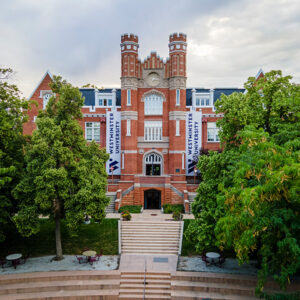
Westminster College is the only CRNA school in Utah.
Westminster College Utah School of Nursing and Health Sciences 1840 South 1300 East Salt Lake City, UT 84105
Contact Information James Stimpson, CRNA, DNP, Program Director ph: (801) 832-2158 tf: (800) 748-4753 fax: (801) 832-3110 email: Jstimpson@westminstercollege.edu
Quick Facts
CRNA Degree offered Master of Science in Nurse Anesthesia
Program Length 29 months
Credit Hours 64 credit hours
Starting Month late August
Application Deadline October 22nd each year. Early applicants with completed applications may be invited to participate in early interviews during October/November. Late applications are considered on a space available basis.
Tuition is calculated at the 2011-2012 rates. Tuition at most schools increases each academic year. Over the duration of the program, expect to pay a tuition that is 5% to 15% higher than what is shown here.
Cost of Tuition: $58,368 *Fees and expenses: $2,261 Grand Total: $60,629
*This includes the cost of health insurance, books and supplies, test fees and miscellaneous school expenses.
Are you concerned that the Westminster College Utah Nurse Anesthesia Program won’t give you the specific experiences or training you need to be a successful CRNA? Learn what standards CRNA Programs must meet in order to be accredited by the Council on Accreditation of Nurse Anesthesia (COA).
This CRNA program (as well as all others that are accredited by the COA) prepares you to take the CCNA certification exam at the conclusion of the program, allowing you to become a CRNA.
In this front-loaded program, you’ll spend your first year completing the didactic portion of the curriculum. You’ll begin your clinical rotations in the beginning of your second year and will continue them until you graduate.
During your education at Westminster College Utah, you’ll have access to state of the art equipment, including SimMan (a human simulator).
You’ll gain experience with a wide variety of cases, giving you a well rounded education base that will fully prepare you for your career as a nurse anesthetist.
Looking for something specific? Find CRNA schools categorized by their unique requirements.
Some CRNA schools require much more out of their applicants than others. See how the requirements at Westminster College Utah compare to most CRNA school’s requirements.
CRNA Program Requirements
Required Bachelor Degree Bachelor's degree in nursing is strongly preferred. Other applicants ie. BS, BA, DC, MD, BA, DDS, etc. may also apply.
RN Current RN license in good standing.
Critical Care Minimum of 1 year of critical care. Critical care experience within the last 3 years is preferred. Applicants with experience in ER or with less than 1 year of critical experience may apply, but may not be selected for an interview at the MSNA Director’s discretion.
Preferred critical care experience includes:
ICU
Coronary Care Unit
Neonatal ICU
Surgical ICU
Medical ICU
They do not accept:
Operating Room
Post Anesthesia Care Unit
GPA Minimum 3.0 GPA, including a minimum 3.0 GPA in core sciences
GRE Scores GRE scores on file from within the last 5 years; minimum combined score of 1000 is preferred.
Certifications
ACLS (Advanced Cardiac Life Support)
PALS (Pediatric Advanced Life Support)*
* PALS is required by the start of clinical rotations; it is not required at the time of application.
Completion of the CCRN Certification is also highly recommended and encouraged.
Course Prerequisites
Organic Chemistry OR Biochemistry Course is recommended
CRNA School Rankings - U.S. News & World Report (2011) This Nurse Anesthesia Program received a score of less than 2.0 out of 5.0 and is considered “less than adequate” by US News and World Report. It received no rank.
Accredited CRNA Programs are reviewed regularly. Westminster College Utah Nurse Anesthetist Program was last reviewed 01/2007. It was given 5 years accreditation and will be reviewed again 05/2012. New CRNA programs are often given a shorter accreditation period.
Pass Rate for CRNA Boards at Westminster College Utah Please note: It is extremely rare for a student at any CRNA school to not eventually pass the exam. Most students who don’t pass the first time pass the second. Very rarely does a person ever take it a third time. This statistic only measures how well the program prepares students to pass the test the first time around.
Where are clinical rotations held? “Clinical sites in Utah (Ogden, American Fork, Layton, Tooele, Salt Lake City, Timpanogos), Idaho (Montpelier, Soda Springs, Boise, Blackfoot), Nevada (Elko), Wyoming (Cheyenne, Evanston), Texas (El Paso), California (Apple Valley), Kansas (Garden City), and Colorado (Alamosa)”
What is the daily schedule like? Clinical days are usually 5 days/week, with an off day for class work. You should expect to be in clinical from 6:30am to 4pm. Some rotations will involve taking call through the evening, night, and weekend.
Can I work as an RN while I’m in the program? You should not plan on working more than 8-16 hours maximum per week in part-time employment.
You need to maintain a grade of 82% or better prior to working part-time, and if your grades fall below acceptable levels, you will be asked to terminate your employment.
What holidays will I get off? The holidays observed at the clinical affiliation site will also be observed by students at that site. These days may vary from one site to another, but usually include: New Years Day, Martin Luther King Day, President's Day, Memorial Day, Independence Day, Pioneer Day (Utah only), Labor Day, Thanksgiving Day, and Christmas Day.