This page was last updated in 2022.
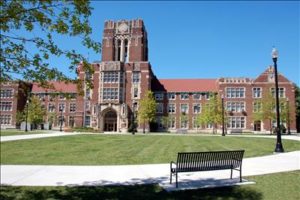
University of Tennessee Knoxville CRNA Program
Nurse Anesthesia Concentration1934 Alcoa Hwy. Suite 365
Knoxville, TN 37920
Quick Facts
CRNA Degree offered
DNP, MSN, Post-Master’s Certificate (entry-level)
Program Length
36 months, full time
Credit Hours
118 semester hours
Starting Month
Mid-August
Application Deadline
December 15th
Entire Cost of CRNA School for the University of Tennessee Knoxville CRNA Program.
This calculation is for the 2020-2021 school year. Tuition at most schools increases each academic year. Over the duration of the program, expect to pay a tuition that is 5% to 15% higher than what is shown here.
Cost of In State Tuition:$75,402
*Fees and expenses: $11,210
Grand Total: $86,612
Cost of Out of State Tuition: $194,700
*Fees and expenses: $12,744
Grand Total: $207,444
*Fees and expenses do not cover personal health care which is a requirement.
University of Tennessee Knoxville Tuition Link
Class Size
17
Number of Applicants
“A large number of applicants. The number is highly variable and the total number has been steadily rising each of the past several years.”
When did this CRNA Program begin?
The Knoxville concentration was started in 2000, but a nurse anesthesia program has been functional at the primary clinical site since 1963. From 1992 and onwards, graduates were awarded the Master of Science in Nursing.
CRNA Program Summary
Are you concerned that University of Tennessee Knoxville CRNA Program won’t give you the specific experiences or training you need to be a successful CRNA? Learn what standards CRNA Programs must meet in order to be accredited by the Council on Accreditation of Nurse Anesthesia (COA).
University of Tennessee Knoxville’s CRNA program (as well as all others that are accredited by the COA) prepares you to take the CCNA certification exam at the conclusion of the program, allowing you to become a CRNA.
The DNP NAC curriculum represents a true front-loaded didactic format with the emphasis on clinical
experiences later in the overall curriculum.
Didactic Curriculum
The program of study begins with foundational DNP and basic sciences content. Basic anesthesia concepts are introduced in the Summer Year-1 semester in the classroom alongside application of these concepts in the clinical setting.
Clinical Practicum
Year-2 transitions into more advanced DNP and anesthesia coursework and focuses on DNP project development and implementation. Time in the clinical setting gradually increases over Year-2, and students focus on the progression of simple to complex anesthesia clinical skills. The number of clinical hours, experiences, and responsibilities increases over time. By the Summer Year-2 semester students are more fully immersed in the clinical setting.
DNP Project
The DNP Scholarly Project is completed in Fall Year-3, and emphasis shifts to clinical experiences and CRNA professional role
development as well as preparation for the National Certification Exam.
Clinical Sites
The primary clinical site for the program is the University of Tennessee Medical Center (UTMC) in Knoxville, a 640-bed academic medical center, Magnet recognized and Level-I adult and pediatric trauma center. UTMC offers a wide range of clinical experiences to student registered nurse anesthetists. Additionally, the following clinical facilities are utilized for curricular enrichment and supplementation:
- Fort Sanders Regional Medical Center
- LeBonheur Children’s Hospital (Memphis, TN)
- Parkwest Medical Center
- Roane Medical Center (Harriman, TN)
- Pending approval: Gadsden Regional Medical Center (Gadsden, AL)
Program Requirements
Looking for something specific? Find CRNA schools categorized by their unique requirements.
Some CRNA schools require much more out of their applicants than others. See how the requirements at the University of Tennessee Knoxville compare to most CRNA school’s requirements.
CRNA Program Requirements
Required Bachelor Degree
A Bachelor of Science (BSN) or a Master’s of Science in Nursing (MSN) degree from a regionally accredited college/university.
RN:
Current RN license. Tennessee license required prior to matriculation.
Critical Care:
A minimum of one-year (by the time of the program start date), current, full-time, adult ICU experience as an RN.
Acceptable critical care experience includes:
invasive hemodynamic monitoring and utilization of vasoactive intravenous medications were a routine occurrence.
- ICU (Intensive Care Unit)
- Coronary Care Unit
- Surgical ICU
- Trauma ICU
- Medical ICU
- Cardiovascular ICU
They do not accept:
- ER (Emergency Room)
- ICN (Intensive Care Nursery/ Neonatal ICU)
- PICU (Pediatric ICU)
- PARR (Post Anesthesia Recovery Room)
Employment time in neonatal and may count toward the minimum one-year critical care criterion.
GPA:
A minimum GPA of 3.0 (on a 4.0 scale)
Minimum GRE scores:
Only applicants with a GPA of less than 3.3 are required to take the GRE. A minimum combined score of 297 or greater on the qualitative and verbal sections suggested. No other examinations, such as the MAT, GMAT, LSAT, or MCAT, are accepted.
To be sure the University of Tennessee Knoxville receives your GRE scores in time, allow for 12 weeks between your test date and the application deadline (Feb 1st).
International Students:
Test of English as a Foreign Language (TOEFL) for applicants whose native tongue is not English, with a minimum score of 550 via paper examination or 215 via computerized examination (earned within two years prior to application).
Certifications:
- ACLS (Advanced Cardiac Life Support)
- PALS (Pediatric Advanced Life Support)
- CCRN or other similar certification (required by matriculation)
Course Prerequisites
A graduate-level course in statistics and a graduate-level advanced pharmacology course from a regionally accredited college/university with a grade of “C” or better.
University of Tennessee Knoxville CRNA Program.
CRNA School Performance
Accredited CRNA Programs are reviewed regularly.
University of Tennessee Knoxville Nurse Anesthetist Program was last reviewed 2014. It was given the maximum of 10 years accreditation standards.
Pass Rate for CRNA Boards at University of Tennessee Knoxville CRNA Program
Please note: It is extremely rare for a student at any CRNA school to not eventually pass the exam. Most students who don’t pass the first time pass the second. Very rarely does a person ever take it a third time. This statistic only measures how well the program prepares students to pass the test the first time around.
First-time test takers: 100% (2019)
Attrition Rate: 12% (2019)
Employment Rate: 100% (2019)
CRNA Salaries
An average nurse anesthetist salary in University of Tennessee Knoxville CRNA Program, Tennessee.
Tennessee CRNA salaries are lower than the national average with an annual mean wage of $171,020.
An average annual nurse anesthetist salary in the US is $189,190 (according to the Bureau of Labor Statistics 2020 study)
Salaries pulled from Bureau of Labor Statistics
All information given on this site about University of Tennessee Knoxville CRNA Program was taken directly from their website.
Did you find an error on this page? Please report it here