This page was last updated in 2022.
The CRNA program at the University of Pennsylvania has recently transitioned to a DNP program and is the first of its kind to be offered by an Ivy League University.
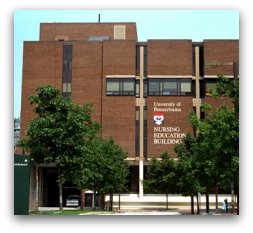
University of Pennsylvania
Nurse Anesthetist Program
Claire M. Fagin Hall
418 Curie Blvd
Philadelphia, PA 19104

Get the 2026 latest updated complete list of CRNA schools
Enter your contact information below for a complete list of CRNA schools – including schools awaiting accreditation decisions.
Quick Facts
CRNA Degree offered
DNP-NA
Program Length
36 months, full time
Credit Hours
111 credit hours
Starting Month
Summer session
Application Deadlines
July 1st to November 2nd
Entire Cost of CRNA School for the University of Pennsylvania Nurse Anesthetist Program.
Tuition is calculated at the 2020-2021 rates. Tuition at most schools increases each academic year. Over the duration of the program, expect to pay a tuition that is 5% to 15% higher than what is shown here.

Claim Your Free List of CRNA Schools
Enter your contact information below to grab your complete list of CRNA schools.
Cost of Tuition: $218,595
University of Pennsylvania Tuition Link
Class Size
25
Number of Applicants
150+ applicants
CRNA Program Summary
Are you concerned that University of Pennsylvania Nurse Anesthetist Program won’t give you the specific experiences or training you need to be a successful CRNA? Learn what standards CRNA Programs must meet in order to be accredited by the Council on Accreditation of Nurse Anesthesia (COA).
This CRNA program (as well as all others that are accredited by the COA) prepares you to take the CCNA certification exam at the conclusion of the program, allowing you to become a CRNA.
In this integrated program, you’ll begin in the summer with a heavy load of class work. By your second semester, you’ll begin your clinical fieldwork. As in any integrated program, your class load will gradually decrease as your clinical work increases.
University of Penn’s nurse anesthesia program integrates learning from the classroom, the simulation lab, and the clinical setting. Their goal is to educate you to become a great practitioner, scholar, educator, researcher, or policymaker.
The simulation lab will give you the opportunity to learn and Operating Room fires.
Clinical experience at the University of Pennsylvania includes rotations at three nationally-ranked children’s hospitals (pediatrics), top hospitals in neighboring three states (cardiovascular), and more.
At Penn, students are matched with a primary site where they spend most of their rotation, enabling faculty to establish mentoring relationships with them. With five primary clinical sites to choose from, students can leave their primary clinical sites for specialty experiences.
As a graduate of this program, you will exceed the minimum number of clinical cases by 50-100%, giving you all the experience you need to be a confident and professional nurse anesthetist.
Program Requirements
Looking for something specific? Find CRNA schools categorized by their unique requirements.
Some CRNA schools require much more out of their applicants than others. See how the requirements at the University of Pennsylvania compare to most CRNA school’s requirements.
CRNA Program Requirements
Required Bachelor Degree
BSN degree from an accredited college or university. You may apply to the program while you are completing your BSN. Acceptance into the program is contingent on your completion of your BSN.
RN
Current, active Pennsylvania Registered Nursing license will be needed upon admission to the program. Being eligible for a PA RN license is needed for the application.
Critical Care
1 year of full-time acute care experience is required but 2 to 3 years of critical care experience is recommended. Each applicant is evaluated on an individual basis to determine the quality and quantity of critical care experience they possess. Note that all critical care experience must have taken place within the last 5 years.
Unacceptable critical care experiences include:
- Neonatal ICU
- Emergency Room
- Recovery Room
- Step Down Units
- Interventional Radiology
GPA
A competitive applicant usually has a minimum GPA of 3.4 in their BSN program.
GRE Scores
The nurse anesthesia program has not established a minimum GRE score for admission. Applicants who have completed their BSN in the United States with a minimum 3.2 GPA on a 4.0 scale may apply for a waiver but must be approved by the Master’s Admissions Committee. Each application is looked at individually, there is no guarantee the waiver will be approved.
Scores in the 50th percentile on the verbal and math are recommended for exams taken prior to August 2011.
International Students
If you are a non-native English speaker, you must submit scores from the TOEFL or IELTS exam. You should score a minimum of 100 on the iBT (internet-based TOEFL) and 7.0 on the IELTS.
Certifications
It is strongly encouraged that applicants are CCRN certified.
Course Prerequisite
- Undergraduate Statistics: This should include inferential and descriptive statistics
Shadowing Requirements
The University of Pennsylvania highly recommends shadowing a CRNA to ensure the career path is a fit for you.
University of Pennsylvania Nurse Anesthetist Program
CRNA School Performance
Accredited CRNA Programs are reviewed regularly.
University of Pennsylvania Nurse Anesthetist Program was last reviewed 10/2015. It was given the maximum of 10 years accreditation standards. The next review will be 10/2025.
Pass Rate for CRNA Boards at the University of Pennsylvania Please note: It is extremely rare for a student at any CRNA school to not eventually pass the exam. Most students who don’t pass the first time pass the second. Very rarely does a person ever take it a third time. This statistic only measures how well the program prepares students to pass the test the first time around.
First-time test takers: 80% (Class of 2019); 5-year average: 85.2%
National average (2019): 84.8%
Attrition Rate: 11% (Class of 2019); 5-year average: 4.70%
CRNA Employment Rate: 100% of graduates were employed within six months of graduation (Class of 2019)
CRNA Salaries
An average nurse anesthetist salary in University of Pennsylvania Nurse Anesthetist Program, Pennsylvania.
Pennsylvania CRNA salaries are slightly lower than the national average with an annual mean wage of $174,240.
An average annual nurse anesthetist salary in the US is $181,040 (according to a 2019 study)
Frequently Asked Questions
Will I be able to work on a part-time basis?
No, you will not be able to work on a part-time basis as there is very limited free time available.
Do all applicants get an interview?
Unfortunately, no. Only highly qualified and competitive applicants are interviewed. The selection committee pays attention to all aspects of the application, in particular, your GRE test scores, GPA, professional experience, employer evaluation, references, etc.
I am interested in the MSN/ Ph.D. option of studies. Does the program offer this option to Nurse Anesthesia applicants?
Yes, the University of Pennsylvania offers the MSN/ Ph.D. option for nurse anesthesia applicants. Note that the deadline for this course of study is November 2nd.
All information given on this site about University of Pennsylvania’s Nurse Anesthetist Program was taken directly from their website.
Did you find an error on this page? Please report it here

Get your *updated* list of CRNA schools
Apply to schools not yet on everyone else's radar.