This page was last updated in 2022.
The University of Alabama (UAB) Nurse Anesthesia CRNA Program is one of the largest CRNA schools in Alabama as well as in the country.
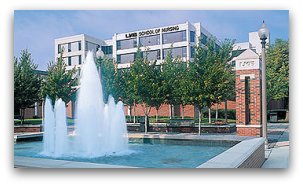
University of Alabama (UAB) CRNA Program
1701 University Boulevard,
Birmingham, AL 35233
(205) 975-7529
Quick Facts
CRNA Degree offered
DNP
Program Length
36 months, full time
Credit Hours
114 semester hours
Starting Month
May
Application Deadline
May 1. Interview completed in July.
Summer Semester of the following year matriculation.
Entire Cost of CRNA School for the University of Alabama (UAB) CRNA Program.
Tuition at most schools increases each academic year. Over the duration of the program, expect to pay a tuition that is 5% to 15% higher than what is shown here.
Cost of In-State Tuition: $65,208
Fees and Expenses: $20,825
Grand Total: $86,033
*Cost of Out of State Tuition: $155,382
Fees and Expenses: $20,825
Grand Total: $176,207
Fees and expenses include the application fee, books, lab equipment, electronic handheld device, **health insurance, dental coverage, and graduation fee.
*Students may qualify for in-state tuition rates during the clinical experience.
** Health Insurance fee may be waived if proof of insurance coverage is provided.
The University of Alabama (UAB) CRNA Program’s tuition and fee schedule. See detailed Costs here.
Class Size
45
Number of Applicants
125
CRNA Program Summary
Are you concerned that the University of Alabama DNP CRNA programs in Alabama won’t give you the specific experiences or training you need to be a successful CRNA? Learn what standards CRNA Programs must meet in order to be accredited by the Council on Accreditation of Nurse Anesthesia (COA).
This CRNA program (as well as all others that are accredited by the COA) prepares you to take the CCNA certification exam at the conclusion of the program, allowing you to become a CRNA.
Your first three semesters are purely didactic, or academic.
You will begin your clinical experience during the fourth semester, while you continue classroom work. Your clinical rotations will be scheduled in an attempt to provide each student with equal types of clinical experience. Throughout your CRNA training, you’ll learn how to:
- Evaluate and assess patients pre, post, and intraoperatively
- Plan the anesthetic management and immediate pre and post-anesthesia management
- Develop and implement an appropriate anesthesia plan designated for patients of all ages with a variety of pathological conditions
- Recognize emergency patient conditions and perform skills required during emergency life support situations
- Recognize, evaluate, and prevent anesthesia complications
CRNA Program Requirements
Required Baccalaureate Degree
Baccalaureate degree in Nursing from an accredited registered nursing program. All BS degree work must be completed by interview prior to May start date.
RN
Valid RN license to practice in the U.S.
Critical Care:
1-year full-time critical care experience as an RN. Critical care nurses are those caring for critically ill patients who require:
- Invasive monitoring
- Administration of vasoactive drugs
Acceptable critical care experience includes but is not limited to:
- Coronary Care Unit
- Medical ICU
- Surgical ICU
- Postoperative Cardiovascular Care Unit
They do not consider experience in the following areas:
- Emergency Room
- Cath Lab
- Step Down Units
GPA
Minimum cumulative GPA of 3.2 on all undergraduate coursework, and a minimum cumulative GPA of 3.0 for science prerequisites.
GRE Scores
There is no minimum score, however, the GRE must be completed prior to application.
TOEFL
International students must submit scores for the TOEFL with a score of 500 or higher.
Certifications
- BLS
- PALS
- ACLS
- CCRN (Optional)
Prerequisite Courses – maybe be taken at UAB or another institution
- Human Anatomy
- Microbiology
- Descriptive Statistics
- Human Physiology
- Chemistry
University of Alabama (UAB) CRNA Program
CRNA School Performance
Accredited CRNA Programs are reviewed regularly.
The University of Alabama DNP CRNA Program was last reviewed 10/2010. It was given 10 years accreditation and will be reviewed again 5/2021. This shows that the program is very stable.
Pass Rate for CRNA Boards at the University of Alabama (UAB) CRNA school
First-time test takers: 82% (class of 2020); 4-year first time pass rate: 91%; 4-year over all pass rate: 100%
National average: 84.8% (class of 2019)
Attrition Rate: 8% (class of 2020)
Employment Rate: 97% (class of 2020)
CRNA Salaries
An average nurse anesthetist salary in Alabama.
Alabama CRNA salaries are below the national average with an annual mean wage of $157,430.
An average annual nurse anesthetist salary in the US is $181,040 (according to the Bureau of Labor Statistics 2019 study)
Salaries pulled from Bureau of Labor Statistics
Did you find an error on this page? Please report it here