This page was last updated in 2022.
The University of Michigan Flint is no longer accepting applications for their MS program and the Fall 2017 class will be the last to complete it. They have received approval from the COA to transition to a DNAP program that is set to begin in Fall 2018. We will continue to update this page as we receive information.
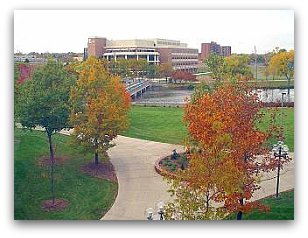
University of Michigan Flint
Nurse Anesthetist Program
Hurley Medical Center
Master of Science in Anesthesia Program
One Hurley Plaza – Dutcher Center
Flint, MI 48503-5993
Quick Facts
CRNA Degree offered
DNAP, Post Master’s to DNP (completion)
Program Length
36 months
Credit Hours
92 credit hours
Starting Month
September
Application Deadline
September 1st is the early review, and February 1st is the regular review.
Entire Cost of CRNA School for University of Michigan Flint Nurse Anesthetist Program
Please note that tuition is calculated at the current 2020-2021 rate. Tuition at most schools increases slightly each academic year. Over the duration of the program, expect to pay a tuition that is slightly higher than what is shown here.
Cost of In State Tuition: $81,650
Fees and expenses: $12,212
Grand Total: $93,862
Cost of Out of State Tuition: $121,808
Fees and expenses: $12,212
Grand Total: $134,020
University of Michigan Flint Tuition Link
Class Size
25, depends on the quality of applicants
Number of Applicants.
100
CRNA Training
Are you concerned that University of Michigan Flint Nurse Anesthetist Program won’t give you the specific experiences or training you need to be a successful CRNA? Learn what standards CRNA Programs must meet in order to be accredited by the Council on Accreditation of Nurse Anesthesia (COA).
The University of Michigan’s CRNA program integrates academic and the University of Michigan – Flint campus. Although didactic coursework follows the academic calendar, the clinical practicums span the entire calendar year.
Program Requirements
Looking for something specific? Find CRNA schools categorized by their unique requirements.
Some CRNA schools require much more out of their applicants than others. See how the requirements at U of M Flint compare to most CRNA school’s requirements.
CRNA Program Requirements.
Required Bachelor Degree
A bachelor’s degree in nursing or an appropriate biological science from an accredited institution.
RN:
Current, unrestricted, licensure as a Registered Nurse in Michigan or any of the other states or in a United States protectorate.
Critical Care:
A minimum of one year’s experience in the last five years as a registered nurse in a critical care nursing area.
Acceptable critical care experience includes:
- Surgical ICU
- Medical ICU
- Coronary Care Unit
Other critical care units may be considered if the applicant has working knowledge of mechanical ventilation, invasive hemodynamic monitors (e.g., pulmonary artery, central venous pressure, and arterial catheters), and is proficient in vasopressor titration..
CRNA shadowing:
A least 8 hours
GPA:
3.0 GPA in required prerequisite classes as well as a 3.0 cumulative undergraduate GPA (last 120 units).
International Students:
Due to the length of time that it may take international applicants to become licensed as a Registered Nurse in the United States, U of M Flint will not consider applications “pending receipt of a license.”
Certifications:
- BLS (Basic Life Support)
- ACLS (Advanced Cardiac Life Support)
- PALS (Pediatric Advanced Life Support Provider)
CRNA Prerequisites
Those seeking admission to the DNAP program must complete the following prerequisites (or their equivalents), with a cumulative GPA of 3.0, at a regionally accredited institution prior to regular admission to the program.
- College Algebra: Quantitative GRE score above 30th percentile, Completion of MTH 111 with a grade of B or better, documentation of successful completion of AP algebra or successful completion of Algebra CLEP exam
- Statistics – graduate or undergraduate level
- General Chemistry for Health Sciences (CHM 150) or Principles of Chemistry I (CHM 260)
- General Chemistry for Health Sciences Lab (CHM 151) or General Chemistry Lab (CHM 261) — strongly recommended
- Fundamentals of Organic Chemistry (CHM 220) or Biologic Chemistry for Health Sciences (CHM 252)
- Microbiology Basics (BIO 135) and Human Anatomy & Physiology II (BIO 168)
- Organismal Biology (BIO 111) and Mammalogy (BIO 421)
* Single semester Anatomy & Physiology courses must be 5 or more credit hours.
Note: Recent repeats of the following courses are required if credits are 10 years old or older:
- Fundamentals of Organic Chemistry (CHM 220) or Biologic Chemistry for Health Sciences (CHM 252)
- Human Anatomy & Physiology I (BIO 167) or Human Anatomy & Physiology II (BIO 168)
University of Michigan Flint Nurse Anesthetist Program
CRNA School Performance
Accredited CRNA Programs are reviewed regularly.
U of M Flint’s Nurse Anesthetist Program was last reviewed 05/2014. It was given the maximum of 10 years accreditation standards.
Pass Rate for CRNA Boards at U of M Flint
Please note: It is extremely rare for a student at any CRNA school to not eventually pass the exam. Most students who don’t pass the first time pass the second. Very rarely does a person ever take it a third time. This statistic only measures how well the program prepares students to pass the test the first time around.
First-time test takers: 90% (Class of 2019, Master of Science in Anesthesia)
National average (2019): 84.8%
Attrition Rate: 5% (Class of 2019, Master of Science in Anesthesia)
Employment Rate: 100% (Class of 2019, Master of Science in Anesthesia)
CRNA Salaries
An average nurse anesthetist salary in University of Michigan Flint Nurse Anesthetist Program, Michigan.
Michigan CRNA salaries are higher than the national average with an annual mean wage of $194,640.
An average annual nurse anesthetist salary in the US is $181,040 (according to the Bureau of Labor Statistics 2019 study)
Salaries pulled from Bureau of Labor Statistics
All information given on this site about University of Michigan Flint Nurse Anesthetist Program was taken directly from their website.
Did you find an error on this page? Please report it here