This page was last updated in 2022.
Saint Mary University is one of four CRNA schools in Minnesota.
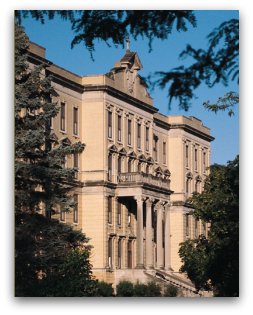
Saint Mary University
Nurse Anesthetist Program
2500 Park Avenue
Minneapolis, MN 55404
Quick Facts
CRNA Degree offered
Master of Science in Nurse Anesthesia
Program Length
28 months (7 semesters), full time
Credit Hours
64-semester credits
Starting Month
August
Application Deadline
April 1st, of each year for matriculation in May of the following year.
Entire Cost of CRNA School for Saint Mary University Nurse Anesthetist Program.
Tuition at most schools increases each academic year. Over the duration of the program, expect to pay a tuition that is 5% to 15% higher than what is shown here.
Cost of Tuition: $43,200
*Fees and expenses: $5,150
Grand Total: $48,350
*This includes the cost of books, supplies, test fees, application fee and miscellaneous school expenses.
Saint Mary’s University Tuition Link
Class Size
30
Number of Applicants
200
CRNA Program Summary
Are you concerned that the Saint Marys University Nurse Anesthesia Program won’t give you the specific experiences or training you need to be a successful CRNA? Learn what standards CRNA Programs must meet in order to be accredited by the Council on Accreditation of Nurse Anesthesia (COA).
This CRNA program (as well as all others that are accredited by the COA) prepares you to take the CCNA certification exam at the conclusion of the program, allowing you to become a CRNA.
The program offers an integrated approach to clinical and professional growth opportunities.
Clinical practicum provides you with the opportunity to apply the principles of anesthesia to direct patient care. You’ll provide supervised care in a variety of settings and in diverse methods of administering a safe anesthetic.
Program Requirements
Looking for something specific? Find CRNA schools categorized by their unique requirements.
Some CRNA schools require much more out of their applicants than others. See how the requirements at Saint Marys University compare to most CRNA school’s requirements.
CRNA Program Requirements
Required Bachelor Degree:
Appropriate bachelor degree from a regionally accredited institution. Appropriate degree fields are nursing, biophysical, biological or behavioral sciences.
RN:
Current, un-encumbered Minnesota RN license, or eligibility for one. Proof of licensure is required within one month of acceptance into the program.
Critical Care:
A minimum of one year of experience in a critical care setting. This experience may or may not be current.
Acceptable critical care experience includes:
- Adult ICU
- Pediatric ICU
- Emergency Department at a level one trauma center
They do not accept:
- Recovery Room
- Post-Anesthesia Care Unit
- Non-trauma center ER
- Telemetry
- Neonatal ICU
- Dialysis
- Surgery
- CV lab
- Step-down units
You must have skills in:
- Hemodynamic monitoring
- Pharmacologic intervention with vasopressors
- Vasodilators
- Cardiac inotropes
- Cardiac and hemodynamic monitoring graphics interpretation
- Ventilator management
GPA:
An overall GPA of 2.75 on a 4.0 scale or higher. GPA of 3.1 – 3.3 or higher in science and/or math courses is needed to be competitive.
GRE scores:
Not required
International Students
All applicants whose native language is not English and/or who submit a transcript from a country other than the U.S. must provide evidence of a TOEFL score of 550 (paper‐based), 213 (computer‐based), or 77 (internet‐based). The TOEFL is not required if the applicant has a bachelor’s or higher degree from a regionally accredited U.S. college or university, or has successfully completed Saint Mary’s University’s English Language Academy certificate program.
Transcripts from countries other than the U.S. must be evaluated on a course‐by‐course basis by World Education Services (www.wes.org) or the Education Credential Evaluators (www.ECE.org) and MELAB.
Certifications are NOT required in order to apply. If you have these certifications, you are encouraged to include them as they may help your chances of acceptance:
- ACLS (Advanced Cardiac Life Support)
- PALS (Pediatric Advanced Life Support)
- NALS (Neonatal Advanced Life Support)
- NRP (Neonatal Resuscitation Program)
- CCRN (Critical Care Registered Nurse)
- TNCC (Trauma Nursing Core Course)
- ATLS (Advanced Trauma Life Support)
Course prerequisites
- Organic or Inorganic Chemistry course completed with a letter grade of “B” or better in the last 5 years. Entry level community or junior college level courses will not be accepted.
Suggested Courses
If your only science courses were taken with your associate’s degree, please consider taking additional bachelor’s or master’s level science and/or math coursework. These courses will help your CRNA degree:
- Biochemistry
- Physics
- Calculus
- Algebra
- Statistics
- Pharmacology
Saint Mary University Nurse Anesthetist Program

CRNA School Performance
Accredited CRNA Programs are reviewed regularly.
Saint Marys University of Minnesota Nurse Anesthetist Program was last reviewed 10/2019. It was given the maximum of 10 years accreditation and will be reviewed again 10/2029. This shows that the program is very stable.
Pass Rate for CRNA Boards at Saint Mary’s University School of Nurse Anesthesia
First-time test takers: 80% (5-year average: 2016-2020)
Attrition Rate: 1% (5-year average: 2016-2020)
CRNA Employment Rate: 100% True for the past 10 years.
CRNA Salaries
An average nurse anesthetist salary in Saint Mary University Nurse Anesthetist Program, Minnesota.
Minnesota CRNA salaries are higher than the national average with an annual mean wage of $192,290.
An average annual nurse anesthetist salary in the US is $181,040 (according to the Bureau of Labor Statistics 2019 study)
Frequently Asked Questions
Who pays for transportation costs?
Transportation between the school and affiliating sites is your responsibility. You may be asked to attend one or more clinical rotations at sites that may be more than 40 miles from the campus.
How many vacation days do I get?
All students are granted 6 legal holidays off annually. All other time off is designated by the Program.
Will I be expected to take “Call”?
Accreditation guidelines and program philosophy require that student nurse anesthetists have a broad base of clinical experience. This includes the opportunity for clinical experience outside of regularly scheduled surgical cases.
As a student at Saint Mary’s University of Minnesota, you must complete at least 120 hours of call time within the clinical curriculum.
“Call time” is defined as being physically present and/or Sundays. Call hours are not to exceed 60 hours in a seven day period.
How can I improve my chances of getting accepted?
If you are looking to improve your chances, they suggest that you assess and/or submit evidence of:
- Certification in your nursing specialty (CCRN or TNCC)
- Taking and passing the CCRN or TNCC certification exam
- Current ACLS, ATLS, PALS, NALS, or NRP certification
- Community service work
Salaries pulled from Bureau of Labor Statistics
All information given on this site about Saint Mary University Nurse Anesthetist Program was taken directly from their website.
Did you find an error on this page? Please report it here