UNC Greensboro Nurse Anesthesia Program is one of six CRNA schools in North Carolina.
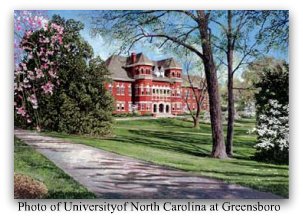
UNC Greensboro Nurse Anesthesia Program
Union Square Campus
124 East Gate City Blvd.
Greensboro, North Carolina 27406
Quick Facts
CRNA Degree offered
Doctor of Nursing Practice Degree, Post-Master’s DNP (for CRNA’s)
Program Length
36 months, full time
Credit Hours
107 credit hours
Starting Month
May
Interview openings are filled on a first completed, first assigned basis, so early applications are encouraged.
Entire Program Cost of CRNA School at UNC Greensboro Nurse Anesthesia Program.
Tuition is calculated at the 2020 rate. Tuition at most schools increases each academic year. Over the duration of the program, expect to pay a tuition that is slightly higher than what is shown here.
Cost of In State Tuition: $27,550
*Fees and expenses: $23,287
Grand Total: $50,837
Cost of Out of State Tuition: $99,964
*Fees and expenses: $23,287
Grand Total: $123,251
*This includes the cost of required and expenses required by the program.
Tuition and University of North Carolina at Greensboro Tuition links
Competitive student stipend options may be available through American Anesthesiology of North Carolina, Craven Regional Hospital, Wayne Memorial Hospital, Cape Fear Valley Hospital, and High Point Regional Hospital.
Information and application for this assistance may be obtained by directly contacting each anesthesiology group or hospital.
Class Size
They usually interview about 75-100 can admit 35 students for entry every Fall in August.
Number of Applicants
The program receives approximately 90 applications each year. Not all applicants complete the process. Not all applicants are granted admission to UNCG Graduate School.
CRNA Program Summary
Are you concerned that Raleigh School of Nurse Anesthesia won’t give you the specific experiences or training you need to be a successful CRNA? Learn what standards CRNA Programs must meet in order to be accredited by the Council on Accreditation of Nurse Anesthesia (COA).
Raleigh School of Nurse Anesthesia (as well as all others that are accredited by the COA) prepares you to take the CCNA certification exam at the conclusion of the program, allowing you to become a CRNA.
Courses
It is highly recommended that the core courses be completed before enrolling in RSNA. It is not mand also those currently enrolled in the program. In addition to sitting in the classroom, these courses are also offered online.
SIM Lab
The school owns its own METI simulator. Students can experience simulator scenarios in both the first and a spinal workshop as part of the curriculum.
Anesthesia Cases
The anesthesia cases include pediatric, obstetrics, geriatrics, open heart, neurology, plastics, otolaryngology, ophthalmology, urology, and management of regional techniques are taught.
Clinical Rotations
You will start your rotations within your first year, more specifically, January of the second semester. Depending on the level of the student, the clinical schedule will be prepared in 4-8 week blocks. First-year students will have the first three rotations in eight-week blocks.
Program Requirements
Looking for something specific? Find CRNA schools categorized by their unique requirements.
Some CRNA schools require much more out of their applicants than others. See how the requirements at Raleigh School of Nurse Anesthesia compare to most CRNA school’s requirements.
CRNA Program Requirements
Required Bachelor Degree
BS in Nursing from an accredited program (NLNAC, CCNE). Post-Master’s Certificate applicants must hold an MSN degree from an accredited program.
RN:
Current licensure as a registered nurse in North Carolina must be obtained prior to enrollment
Critical Care:
One year minimum of continuous full-time acute care experience in a critical care setting.
You should be able to calculate drug dosages and vasoactive drips without the use of an IV pump or hemodynamic monitor.
Acceptable critical care experience includes:
- Cardio Vascular ICU
- Neuro ICU
- Surgical ICU
- Medical ICU
- *Pediatric ICU
- *Neonatal ICU
*Accepted as long as you also have experience in an adult critical care.
They do not accept:
- ER (Emergency Room)
- PACU (Post Anesthesia Care Unit)
- OR (Operating Room)
GPA:
Minimum GPA 3.2. However, a GPA of less than 3.5 is not considered competitive.
Minimum GRE scores:
Satisfactory score on the GRE or MAT (taken within five years). Applicants to the Post Master’s Certification are not required to provide GRE or MAT scores.
Certifications:
- ACLS (Advanced Cardiac Life Support)
- BCLS (Basic Cardiac Life Support)
- PALS (Pediatric Advanced Life Support)
- CCRN (applicants will not be considered for an interview until they have this certification)
Course Prerequisites
- a course in Health Assessment
- a course in Chemistry
- a course in Statistics that includes Inferential Statistics
Minimum of 2 shadowing experiences with a CRNA within the past year,
Unconditional admission to the Graduate School at UNCG
Raleigh School of Nurse Anesthesia
CRNA School’s Performance
Accredited CRNA Programs are reviewed regularly.
Raleigh School of Nurse Anesthesia was last reviewed 05/2012. It was given the maximum of 10 years accreditation andards.
Pass Rate for CRNA Boards at Raleigh School of Nurse Anesthesia:
First-time test takers: 90% (2019)
CRNA Employment: 97% in the first six months following graduation for the 2018-2019 cohort.
Attrition Rate: 3% (2019)
CRNA Salaries
An average nurse anesthetist salary in Raleigh School of Nurse Anesthesia, North Carolina
North Carolina CRNA salaries are slightly higher than the national average, with an annual mean wage of $189,060.
An average annual nurse anesthetist salary in the US is $181,040 (according to the Bureau of Labor Statistics 2019 study)
Frequently Asked Questions
How many hours should I expect to be engaged in the program each week?
The time committed to studying, class and clinical practice may consume over 60 hours a week.
Will I be allowed to work as a nurse while I am attending your school?
The University encourages students to plan finances appropriately, before entering the program, so they will not have to work while enrolled in the program. Students enrolled in the DNP Nurse Anesthesia Program are discouraged from working as an RN. Enrolled students shall not work as a nurse anesthetist while in the program.
All information on this site about Raleigh School of Nurse Anesthesia’s Nurse Anesthetist Program was taken directly from their website.
Did you find an error on this page? Please report it here