This page was last updated in 2022.
Midwestern University Glendale Nurse Anesthetist Program is one of two CRNA programs in Arizona. Program strengths include a variety of clinical sites and an anesthesia simulation laboratory.
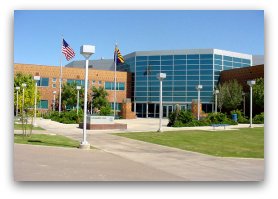
Midwestern University Glendale
Nurse Anesthesia Program
19555 North 59th Avenue
Glendale, AZ 85308-6813
Contact Information
Dr. Rodney Fisher, Ph.D., CRNA, Program Director
ph: 623-572-3760
fax: 623-572-3227
email: rfishe1@midwestern.edu
Quick Facts
CRNA Degree offered
DNAP, MSNA; Post-Master’s DNAP (completion)
Program Length
36 months, full time
Credit Hours
177 Quarter hours
Starting Month
August
Application Deadline
Rolling admissions. Typically, a class is filled by mid-October so applicants are strongly encouraged to have their applications submitted by August 1st.
Entire Program Cost of CRNA School at Midwestern University Glendale Nurse Anesthetist Program.
Tuition is calculated at the 2019-2020 rates. Historically, tuition has increased between 3.75% and 7% annually.
Cost of Tuition: $147,591
Fees and Total: $149,697
Midwestern University Tuition Link
Class Size
34
Number of Applicants
Approximately 130
CRNA Training
The 36-month Nurse Anesthesia Program consists of three phases.
The first phase (3 quarters) is entirely online allowing students to remain at their home residence and possibly continue working as a registered nurse. This online phase introduces students to topics such as professional development, leadership, research methods, and healthcare policy.
The second phase (4 quarters) will begin a face-to-face didactic experience providing the student with a strong foundation in the basic sciences upon which the student will build a framework of basic and advanced principles of anesthesia practice, pharmacology, and related psychomotor and decision-making skills. All coursework in the first two phases of the program must be completed before starting the third phase of the program.
The third phase (5 quarters) encompasses the clinical practicum, board preparation study, and a research-based scholarly project related to anesthesia. The clinical phase provides students with the necessary hands-on experience to develop the knowledge, skills and attitudes essential to the practice of nurse anesthesia in a variety of practice settings.
All students will be considered for rotation to clinical sites in Arizona, Arkansas, California, Colorado, Florida, Louisiana, Montana, Nevada, New Mexico, Ohio, Texas, Utah, Washington state, and all available clinical locations. All students will be considered for rotation to clinical sites in Arizona, California, Colorado, Florida, Louisiana, Montana, New Mexico, Ohio, Texas, and Washington. You may be assigned to rotations in any combination of these states to ensure the best quality set of clinical rotations. The program assists students with lodging at clinical sites. Some sites offer free or subsidized housing.
Program Requirements
Looking for something specific? Find CRNA schools categorized by their unique requirements.
Some CRNA schools require much more out of their applicants than others. See how the requirements at Gulf Coast University Florida compare to most CRNA school’s requirements.
CRNA Program Requirements
Required Baccalaureate Degree
Bachelor’s degree in Nursing granted by a regionally accredited U.S. college or university
RN
RN licensure in the United States or its territories
Critical Care
Minimum of one year of critical care registered nursing experience by the application deadline. Acceptable critical care experience includes:
- Adult ICU (Intensive Care Unit)
- Pediatric ICU
- Emergency Room
Not accepted:
- NICU (Neonatal Intensive Care Unit)
Experience should include management of mechanical ventilation, invasive monitoring, and vasoactive medication infusions.
GPA
Minimum cumulative GPA of 3.0 on a 4.0 scale.
Minimum science GPA of 3.0. The courses included in the calculation of the science GPA include anatomy, physiology, pharmacology, chemistry, physics, and microbiology. The average accepted student has a GPA of 3.66 (2022).
GRE Scores
Not required
TOEFL
The TOEFL is not required. International applicants must complete at least 30 semester hours of coursework from an accredited university in the United States or from a Canadian institution that uses English as the primary language of instruction.
Certifications
- ACLS (Advanced Cardiovascular Life Support)
- PALS (Pediatric Advanced Life Support)
Program Prerequisites
Applicants must complete all prerequisite coursework prior to application with a grade of C or better.
- Anatomy and Physiology
- General Chemistry
Not required but strongly recommended:
- Bio Chemistry
- Organic Chemistry
Midwestern University Glendale Nurse Anesthetist Program
CRNA School Performance
Objective School Rating System
Though Midwestern didn’t receive a great rank using this flawed, subjective rating system, they rank roughly in 10th place when using a more objective system – one that actually reflects the school’s performance and World Report’s rankings.
Accredited CRNA Programs are reviewed regularly.
Midwestern University Glendale Nurse Anesthetist Program was last reviewed in October 2011. The program was awarded a 10-year accreditation and will be reviewed again in October 2021. This shows that the program is very stable.
Pass Rate for CRNA Boards at Midwestern University Glendale
First-time test takers (2020): 93%
National average (2020): 85.2 %
Attrition Rate: 3% (2020)
CRNA Employment Rate: 100% (2020)
CRNA Salaries
An average nurse anesthetist salary in Midwestern University Glendale Nurse Anesthetist Program, Arizona
Arizona CRNA salaries tend to be well below the national average with an annual mean wage of $173,460.
An average annual nurse anesthetist salary in the US is $189,190 (according to the Bureau of Labor Statistics 2020 study).
*If you have additional questions you would like answered about Midwestern University Glendale’s Nurse Anesthetist Program, please contact the school directly.
Salaries pulled from Bureau of Labor Statistics
Did you find an error on this page? Please report it here