This page was last updated in 2022.
The Medical University of South Carolina is one of two CRNA schools in South Carolina.
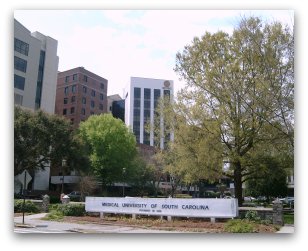
Medical University of South Carolina
Nurse Anesthetist Program
151B Rutledge Avenue
P.O. Box MSC 962
Charleston, SC 29425
Quick Facts
CRNA Degree offered
Doctor of Nurse Anesthesia Practice, Post Master’s DNP (completion)
Program Length
36 months, full time
Credit Hours
116 semester hours
Starting Month
May
Application Deadline
Application deadline September 15th. Invitations for an interview will be sent out via email in late October/early November. Interviews take place in early to mid-December.
Entire Cost of CRNA School for Medical University of South Carolina Nurse Anesthetist Program.
Tuition and fees are for 2020-2021. Tuition at most schools increases each academic year. Over the duration of the program, expect to pay a tuition that is 5% to 15% higher than what is shown here.
Cost of In State Tuition:$69,516
*Fees and Total In State: $83,916
Cost of Out of State Tuition: $102,573
*Fees and Total Out State: $116,973
*This includes the estimated cost of books, test fees and application fee.
Medical University South Carolina Tuition Link
Class Size
26-30
Number of Applicants
120-150. They interview around 60 applicants.
CRNA Program Summary
Are you concerned that Medical University South Carolina’s Nurse Anesthesia Program won’t give you the specific experiences or training you need to be a successful CRNA? Learn what standards CRNA Programs must meet in order to be accredited by the Council on Accreditation of Nurse Anesthesia (COA).
This CRNA program (as well as all others that are accredited by the COA) prepares you to take the CCNA certification exam at the conclusion of the program, allowing you to become a CRNA.
MUSC’s nurse anesthetist program is primarily front-loaded, meaning that the didactic portion, conducted at the Medical University of South Carolina, will take place in the first 18 months. During the remaining 18 months, you’ll complete your clinical experience at local and regional hospitals, while continuing a very light didactic load.
Quoted from Medical University South Carolina’s website – bold is supplied by all-crna-schools.com:
“The clinical curriculum offers opportunities for diverse experiences in the anesthetic management of elective and regional anesthetic agents. These agents will be administered by all of the recognized techniques to a wide variety of patients.
Do your students compete with anesthesia residents?
Rotations are shared at Medical University of South Carolina’s Medical Center and Charleston Veteran’s Administration Medical Center.
Are students allowed to perform their own regional anesthesia?
“Yes. In addition to very comprehensive didactic training that includes a human cadaver lab, our students gain hand VA Medical Center, a large percentage of the surgical cases are done with regional anesthetic techniques performed by our students.
Program Requirements
Looking for something specific? Find CRNA schools categorized by their unique requirements.
Some CRNA schools require much more out of their applicants than others. See how the requirements at Medical University South Carolina compare to most CRNA school’s requirements.
CRNA Program Requirements
Required Bachelor Degree
You need either a Bachelor of Nursing degree (from an accredited program) or a higher nursing degree.
RN:
Current RN license. Once admitted, you will have to obtain your South Carolina and Georgia RN license before you start your clinical rotations.
Critical Care:
Have a minimum of one-year full-time experience as an RN in a critical care setting when you apply to the program. Most who are admitted into the program have 24 months of experience.
Examples of acceptable critical care experience:
- ICU
- Coronary Care Unit
- Surgical ICU
- Medical ICU
- Neonatal ICU
Unacceptable critical care experiences include:
- Emergency Room
- Post-Anesthesia Care Unit
- Operating Room
GPA:
Minimum 3.0 GPA, most who are admitted into the program have a 3.5 GPA or greater.
GRE scores:
This is only required if your GPA is below 3.6. The GRE must be completed within the last 5 years. The GRE is waived if your GPA is 3.6 or higher or if you hold an earned master’s or higher level degree from a regionally accredited institution.
International Students:
You’ll need a copy of TOEFL scores if you have not studied in the U.S.
Certifications:
- ACLS (Advanced Cardiac Life Support)
- PALS (Pediatric Advanced Life Support)
Course Prerequisites
- General Chemistry
- Anatomy
- Physiology
- Pharmacology
- Statistics which includes descriptive and inferential statistics
- *Organic Chemistry, Pathophysiology, and Microbiology are recommended, but not required.
Shadowing Experience
You must submit an Anesthesia Clinical Shadowing Experience Log.
Medical University of South Carolina Nurse Anesthetist Program
CRNA School Performance
Accredited CRNA Programs are reviewed regularly.
Medical University of South Carolina Nurse Anesthetist Program was last reviewed 5/2020. It was given the maximum of 10 years accreditation and will be reviewed again 5/2030. This shows that the program is in full compliance with the COA’s accreditation standards.
Pass Rate for CRNA Boards at Medical University of South Carolina Nurse Anesthetist Program
Please note: It is extremely rare for a student at any CRNA school to not eventually pass the exam. Most students who don’t pass the first time pass the second. Very rarely does a person ever take it a third time. This statistic only measures how well the program prepares students to pass the test the first time around.
First-time test takers: 81% (2020)
National average (2020): 85.2%
MUSC graduates have achieved a pass rate on the certification exam above the national average for the past eleven years, including 100% pass rate for nine of those years. Their class average is typically 20 to 30 points above the national mean, with at least one or two students achieving the highest possible score on an annual basis.
Attrition Rate: 3.7% (2021); 0% (2020)
CRNA Employment Rate of program graduates
All students who sought employment were able to find jobs within 6 months after graduation.
Medical University South Carolina’s CRNA requirements
CRNA Salaries
An average nurse anesthetist salary in Medical University of South Carolina Nurse Anesthetist Program, South Carolina
South Carolina nurse anesthetist salaries are slightly below the national average with an annual mean wage of $185,850.
An average annual nurse anesthetist salary in the US is $189,190 (according to the Bureau of Labor Statistics 2020 study)
Frequently Asked Questions
Can I work while I’m in the program?
You cannot work as a nurse anesthetist while undergoing this program, but you may work in other capacities provided that your performance remains satisfactory.
How much time off will be given throughout the course of the program?
For the first year of the program, time off will be given according to the University’s calendar. In the final eighteen months of the program, you will observe holidays according to staff responsibilities. Thirteen days will be provided as sick days or vacation days during the clinical period.
All information given on this site about Medical University of South Carolina Nurse Anesthetist Program was taken directly from their website.
Did you find an error on this page? Please report it here