Endeavor Health & DePaul University CRNA Program
Competitive, Chicago‑area DNP program for experienced critical care RNs, offering 950+ anesthetic cases, diverse high‑acuity clinical sites, a 5‑year NCE pass rate of 97.6%, and family‑friendly commute times to clinical sites.
Trying to figure out if Endeavor Health School of Anesthesia is the right CRNA program for you? Inside All CRNA Connect, you can compare Endeavor to every other accredited program using our CRNA School Finder tool.
Open the School Finder: Instant access to filters for 150+ accredited CRNA programs by state, GPA, ICU background, cost, and more.
Location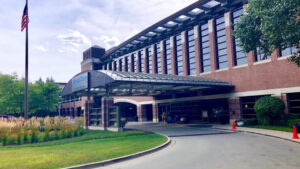
Endeavor Health School of Anesthesia
2650 Ridge Avenue, Rm G603
Evanston, IL 60201
Endeavor CRNA Program at a Glance
| Degree | Doctor of Nursing Practice (DNP) |
| Length | 36 months, full-time only |
| Start Term | September |
| Class Size | 40 |
| Acceptance Rate | 11% |
| Established | 1925 |
| Application | NursingCas |
| App Deadline | May 1, 2026 (for Sept. 2027 start) |
With an acceptance rate of around 11%, Endeavor is highly competitive. To improve chances of acceptance, members of All CRNA Connect use our School Finder to identify programs with acceptance rates up to 40%. If you’re not sure how your stats stack up or which Illinois or Midwest CRNA programs fit you best, use our CRNA School Finder.
Help me improve my chances of acceptance
Tuition and Estimated Costs for Endeavor Health CRNA School
Tuition is billed by both Endeavor Health and DePaul University; DePaul tuition is paid separately through DePaul. The figures below are based on 2025-2026 rates and are for planning only. Most schools increase tuition annually, so you can expect final costs to be 5–15% higher over the life of the program.
| Estimated program tuition (Endeavor + DePaul): $116,500 |
| Estimated fees, books, and expenses: $9,000 |
| Estimated total program cost: $125,500 |
For the most current tuition and fee schedule, see Endeavor Health’s official tuition page.
Nurse anesthesia school is a six‑figure investment, and costs vary widely between programs. Inside All CRNA Connect, members use the School Finder to compare total estimated costs, in‑state vs out‑of‑state tuition, and fees across 150+ schools so they can build a realistic budget before applying.
Compare CRNA school costs in the School Finder
Clinical Summary
Timeline: 36‑month integrated curriculum: about 16 months of intensive classroom coursework, followed by 20 months of clinical residency with a research course, DNP project, and a lighter didactic load.
Clinical Residency: As a student here, you will administer ~ 950 general and regional anesthetics to all patient populations and for all surgical and diagnostic procedures, including but not limited to general surgery, orthopedics, obstetrics and gynecology, pediatrics, geriatrics, transplant, thoracic, open heart, neurosurgery, trauma, and office-based anesthesia.
Clinical Sites: 18 diverse clinical sites: community hospitals, academic centers, research institutions, ambulatory surgery centers, and office‑based practices – giving you a strong, high‑intensity clinical experience.
Choosing a CRNA school is a major decision, almost like buying a house. The difference? When you’re house-hunting, you have a realtor and home inspector to guide you toward the right choice.
We wanted you to have that same sense of support and confidence within All CRNA Connect. That’s why we connect you with SRNAs who’ve been there and done that. They regularly share insider advice on what to look for in a program and how to navigate the application process like a pro.
Get SRNA insights inside All CRNA Connect
Admission Requirements
| Degree | BSN or MSN |
| GPA: Compiled | 3.5 |
| GPA: Nursing | 3.5 |
| GPA: Science | 3.0 (recommended) |
| GRE | Recommended (310 is competitive) |
| RN | Current, unrestricted license |
| Organic Chemistry (lecture) | Within 5 yrs of matriculation |
| Critical Care experience | 2 years (counted at matriculation) |
| Critical Care experience | Current and ongoing employment |
| Critical Care units accepted | ICU, MICU, SICU, CCU, CTICU, CVICU, Neuro ICU and PICU |
| Certifications | BLS, PALS, ACLS; CCRN (highly recommended) |
| Shadow a CRNA | One day |
| ESL Applicants | TOEFL |
| Other | Proof of vaccination, drug screen, & background check |
If your GPA is under 3.5 or you’d rather not take (or retake) organic chemistry, don’t get discouraged. Many CRNA programs weigh requirements differently, and our members use the School Finder to quickly rule out programs they don’t qualify for so they can spend more time applying and less time sitting in extra classes. Plus, in All CRNA Connect, you’ll find examples of successful applicant profiles, interview prep, and feedback from current SRNAs and CRNAs.
Find CRNA programs you already qualify for
Outcomes & Accreditation
| NCE Pass Rate (5 yr average) | 97.6% |
| Attrition Rate (5 yr average) | 2.6% |
| Employment (within 6 months) | 100% |
| Accreditation from COA | Max: 10 yrs, 2025 is the next visit |
If Endeavor Health School of Anesthesia is on your shortlist, don’t stop here. Use our CRNA School Finder (inside All CRNA Connect) to build a comparison list of 5–10 programs that match your goals, timeline, and family situation so you’re not relying on one “dream” school.
Build my CRNA school shortlist
Before you click away…
Since 2010, we’ve helped aspiring CRNAs find, compare, and get into programs that fit their stats, finances, and family life, not just their dreams.
Inside All CRNA Connect, you’ll get:
- Access to the CRNA School Finder for 150+ accredited programs (filters for state, GPA, ICU, tuition, GRE, and more).
- A private community of 800+ nurses, SRNAs, and CRNAs sharing real‑world insight on programs, interviews, and day‑to‑day SRNA life.
- Member‑only resources: timelines, checklists, and Q&A events to keep you on track from ICU to acceptance.
If you’re serious about becoming a CRNA, don’t try to figure it all out alone.
Join All CRNA Connect & unlock the CRNA School Finder
Check out our other pages!
CRNA Schools by State
CRNA Schools by Cost