Doctor of Nursing Practice Program (Nurse Anesthesia)
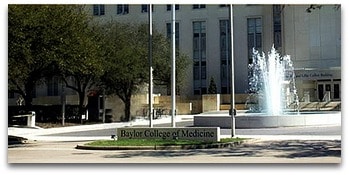
Baylor College of Medicine Houston
One Baylor Plaza, MS: BCM115
DeBakey Bldg., Suite M108
Houston, Texas 77030
Quick Facts
CRNA Degree Offered
Doctor of Nursing Practice for the BSN-prepared registered nurse, as well as an MSN-DNP completion program. This page details the BSN-DNP program.
Program Length
36 months, full time
Credit Hours
132 semester hours, 31 of which are offered online
Starting Month
January
Application Deadline
Application deadline is June 1 of the year prior to which admission is being sought. All supporting documents must be received by June 15.
The online application is only accessible January 15 through June 1st of each year.
Entire Program Cost of CRNA School at Baylor College of Medicine Houston.
Please note that tuition is calculated at the 2020-2021 rate. Tuition at most schools increases each academic year. Over the duration of the program, expect to pay a tuition that is 5% to 15% higher than what is shown here.
Cost of Tuition: $79,556
Fees and Total: $116,456.00
Visit their tuition page to get a better understanding of calculations. This number includes tuition, fees, application fee, and book supplies. *The health insurance fee is mandatory unless currently insured elsewhere.
Class Size
Baylor College of Medicine Houston accepts 28 students each year into the standard BSN-DNP program. In addition, 30 master’s prepared CRNAs are admitted who wish to advance their careers with the DNP degree.
Number of Applicants
They receive 55-130 applications depending on the year.
CRNA Training
Are you concerned Baylor College of Medicine Houston won’t give you the specific experiences or training you need to be a successful CRNA? Learn what standards CRNA Programs must meet in order to be accredited by the Council on Accreditation of Nurse Anesthesia (COA).
During the first 18 months of the program at Baylor College of Medicine Houston, you’ll be in the didactic phase, gaining a solid foundation in the science of nurse anesthesiology. This phase is divided into 9 blocks where one block builds upon the foundation laid in the previous block. This repetition of information will give you a huge advantage when you take the CRNA boards at the end of the program and is one of the main reasons for Baylor’s high board pass rate.
During blocks 3, 5 ands-on experience in nurse anesthesia with the use of their high fidelity human patient simulator. The simulator is programmed to mimic the physiology of almost any patient. This gives you the opportunity to develop your skills in a non-threatening environment before you are expected to care for real patients.
The last 18 months are dedicated to the clinical phase. Note that all of your clinical experience will be gained at nearby hospitals. Many students walk, ride their bikes or take the bus to clinical (although you’ll most likely want your car for late night shifts).
Each clinical site was chosen to give you a specific experience in anesthesia. Through your rotation at each site, you’ll gain a broad range of skills and experiences.
In your 8 months at Ben Taub Hospital, you’ll gain experience in general/trauma anesthesia techniques as well as obstetrics.
During your 4 months at the DeBakey VA Medical Center, you’ll spend time learning general and geriatric anesthesia.
During your 4 months at the Houston Methodist Hospital, you’ll gain exposure to general operating room anesthesia. At the Heart Center, you’ll also gain experience in the anesthetic management of patients undergoing cardiac, thoracic, vascular (major and transplantation procedures.
In your 1 month at the Children’s Hospital, you’ll be exposed to a variety of surgical procedures (inpatient and nurse anesthetists.
Finally, at St. Luke’s Episcopal Hospital, you’ll gain exposure to the practice of anesthesia in the private hospital setting.
Program Requirements
Looking for something specific? Find CRNA schools categorized by their unique requirements.
Some CRNA schools require much more out of their applicants than others. See how the requirements at Baylor College of Medicine Houston compare to most CRNA school’s requirements.
CRNA Program Requirements
Required Bachelor Degree:
BSN (Bachelor of Science in Nursing) from a fully accredited college or university in the United States.
RN:
All applicants must possess a valid, unencumbered RN license from at least one of the 50 United States to apply. Once admitted students must maintain an unencumbered R.N. license from Texas and/or another state participating in the Enhanced Nurse Licensure Compact.
Critical Care:
A minimum of one year (two years preferred) of experience in an area of intensive care nursing.
ICU in any setting, for example:
- Cardiovascular ICU
- Surgical ICU
- Neuro ICU
- Medical ICU
- Pediatric ICU (Level III)
- Neonatal ICU (Level III)
- Open-Heart Recovery Unit
They do NOT accept:
- Step Down or transition care areas
- Post-Coronary Care
- Intermediate Care Units
- Progressive Care Units
- Recovery Room/ Post-Anesthesia Care Unit
- Operating Room
- Emergency Room
GPA
Cumulative undergraduate grade point average of 3.0 or better (where A = 4.0)
GRE
Completion of the Graduate Record Examination (verbal, quantitative, and analytical writing sections). The GRE exam must have been taken within the past four years. Only the most recent GRE scores will be considered. ALL BSN applicants are required to take the GRE. Post-masters applicants (MS-DNP) who currently hold CRNA certification are not required to submit GRE scores.
In order for an applicant’s GRE scores to be competitive, they recommend scores at or above the 50th percentile on all three sections of the exam (verbal, quantitative, and analytical writing). They will continue to accept old test version GRE scores as long as scores are not more than four years old as of the application deadline.
Certifications:
- BLS (Basic Life Support)
- ACLS (Advanced Cardiac Life Support)
- PALS (Pediatric Advanced Life Support)
- CCRN (Critical Care Registered Nurse) strongly encouraged
Undergraduate Class Prerequisites with a B or better:
- Organic Chemistry
- Statistics
Baylor College of Medicine Houston Nurse Anesthetist Program
CRNA School Performance
Accredited CRNA Programs are reviewed regularly.
Baylor College of Medicine Houston’s Nurse Anesthetist Program was last reviewed 05/2014. It was given the maximum of 10 years accreditation standards.
Pass Rate for CRNA Boards at Baylor College of Medicine Houston
As of 2019, 100% of the most recent BSN-DNP cohort passed the NCE exam on their first attempt.
National average: 84.8% (2019); 85.2% (2020)
Attrition Rate: 6.25% (Most recent cohort) Five-year attrition rate is 5.2%
Employment Rate: 100%
CRNA Salaries
An average nurse anesthetist salary in Baylor College of Medicine Houston Nurse Anesthetist Program, Texas
The average Texas CRNA salary is $180,380.
An average annual nurse anesthetist salary in the US is $189,190 (according to the Bureau of Labor Statistics 2020 study)
Frequently Asked Questions
Describe the capstone project
During the last 9 months of the program at Baylor College of Medicine Houston, you’ll complete a capstone project under the guidance of a faculty advisor.
Through this project, you will gain critical thinking skills as a result of analyzing current literature and oral forms.
What is the class schedule?
Mon – Friday 8 am to 5 pm. You will rarely be asked to do anything on the weekends.
Can I work as an RN while I’m in the program?
Outside employment is strongly discouraged. If you do choose to work, you may be able to work 1-2 weekend shifts per month during the first year. You will find it virtually impossible to work during the clinical phase of the program.
What is the basis for selection?
The Admissions Committee at Baylor College of Medicine Houston will select those candidates whom they consider to be most likely to succeed in graduate studies in nurse anesthesia as evidenced by:
- Undergraduate and graduate (if applicable) academic achievement.
- Graduate Record Examination scores (if applicable).
- Evaluation of accomplishments and supervisors.
- Interview with the Admissions Committee.
Salaries pulled from Bureau of Labor Statistics
Attrition rates pulled from BCM Program Results
All information given on this site about Baylor College of Medicine Houston’s Nurse Anesthetist Program was taken directly from their website.
Did you find an error on this page? Please report it here