This page was last updated in 2022.
The University of South Carolina (Columbia) is one of two CRNA schools in South Carolina.
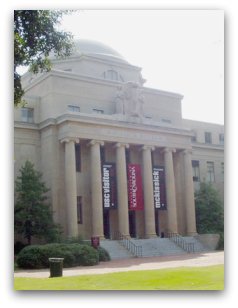
University of South Carolina Columbia
Nurse Anesthetist Program
15 Richland Medical Park, Suite 221
Columbia, SC 29203
Contact Information
Graduate Program in Nurse Anesthesia
School of Medicine University of South Carolina
6311 Garners Ferry Rd
Building 100, Office 301
Columbia, SC 29208
803-211-3753
anesthesia@uscmmed.sc.edu
Quick Facts
CRNA Degree offered
DNAP
Program Length
36 months, full time
Credit Hours
110 semester hours
Starting Month
May
Application Deadline
August 31st. Interviews with selected students are held in October/November of the year. Notification of acceptance or decline will be sent to applicants in November.
Entire Cost of CRNA School for University of South Carolina Columbia Nurse Anesthetist Program.
Tuition is calculated at the 2014-2015 rate. Tuition at most schools increases each academic year. Over the duration of the program, expect to pay a tuition that is 5% to 15% higher than what is shown here.
Cost of In State Tuition: $67,905
*Fees and expenses: $7,710
Grand Total: $75,615
Cost of Out of State Tuition: $115,965
*Fees and expenses: $8,010
Grand Total: $123,975
*This includes the USC fees, clinical fees, and other miscellaneous expenses.
University of South Carolina Columbia Tuition
Class Size
40
Number of Applicants
110 applicants per year
When did this CRNA Program begin?
In 1963
CRNA Program Summary
Are you concerned that University of South Carolina Columbia’s Nurse Anesthetist Program won’t give you the specific experiences or training you need to be a successful CRNA? Learn what standards CRNA Programs must meet in order to be accredited by the Council on Accreditation of Nurse Anesthesia (COA).
This CRNA program (as well as all others that are accredited by the COA) prepares you to take the CCNA certification exam at the conclusion of the program, allowing you to become a CRNA.
The first two semesters of this program are online in collaboration with University of South Carolina College of Nursing. This format allows students to delay relocating to South Carolina while they complete introductory and foundational didactic coursework.
The students will meet on campus at the end of the second semester (second week of December) for orientation and simulation activities that will help solidify anesthesia concepts taught in the Fall semester.
Once students begin the on-campus portion of the program in January, outside employment is strongly discouraged due to the rigor and time commitment of the program.
From the time the student begins the on-campus portion of the program until graduate on, the program provides simulation and clinical activities to enable the educational experience to be as integrated as possible.
Opportunities to observe and practice the concepts taught in the classroom provide the student with hands-on application, enhancing acquisition on of both knowledge and skills.
Throughout the program, the student will complete some courses online in order to increase flexibility with the clinical schedule.
Program Requirements
Looking for something specific? Find CRNA schools categorized by their unique requirements.
Some CRNA schools require much more out of their applicants than others. See how the requirements at University of South Carolina Columbia compare to most CRNA school’s requirements.
CRNA Program Requirements
Required Bachelor Degree
A Bachelor’s degree in nursing or an associate degree in nursing with a bachelor’s degree in a basic science qualify for admission, if prerequisite courses in anatomy, physiology, microbiology and chemistry are completed from an accredited college or university.
RN:
Current licensure as a registered nurse in one of the 50 states; South Carolina licensure is required prior to matriculation
Critical Care:
A minimum of one year (full-time) critical care nursing experience prior interviews. (Interviews will begin in December.) Current, ongoing intensive care unit experience is preferred.
They do not accept Emergency Room as critical care experience.
GPA:
A cumulative GPA of 3.00 or higher is needed to be competitive. Competency based Nursing Programs where curriculum does not generate a GPA will not qualify applicants for admission.
Please note: the website states that a GPA of 3.0 or better is preferred, while the handbook states it is required.
Minimum GRE scores:
A threshold score of at least 305 is suggested to be competitive.
Certifications: These are all required before matriculation and must be good for at least 8 months after matriculation.
- BLS (Basic Life Support)
- ACLS (Advanced Cardiac Life Support)
- PALS (Pediatric Advanced Life Support)
CRNA Educational Requirements
- Anatomy
- Physiology
- Microbiology
- Chemistry
A minimum of a 3-credit hour course covering biochemistry and organic chemistry is required, but a General Chemistry course (3 credit hours) may be accepted.
University of South Carolina Columbia Nurse Anesthetist Program
CRNA School Performance
Accredited CRNA Programs are reviewed regularly.
University of South Carolina Columbia Nurse Anesthetist Program was last reviewed 10/2019. It was given the maximum of 10 years accreditation standards.
Pass Rate for CRNA Boards at the University of South Carolina Columbia
Please note: It is extremely rare for a student at any CRNA school to not eventually pass the exam. Most students who don’t pass the first time pass the second. Very rarely does a person ever take it a third time. This statistic only measures how well the program prepares students to pass the test the first time around.
First-time test takers (2020): 90%
National average (2019): 84.8%
Attrition Rate: Class of 2020: 5%
Employment Rate: Class of 2020: 100%
CRNA Salaries
An average nurse anesthetist salary in University of South Carolina Columbia Nurse Anesthetist Program, South Carolina.
South Carolina CRNA salaries are lower than the national average with an annual mean wage of $165,940.
An average annual nurse anesthetist salary in the US is $181,040 (according to a 2019 study)
All information given on this site about University of South Carolina Columbia Nurse Anesthetist Program was taken directly from their website.
Did you find an error on this page? Please report it here
