This page was last updated in 2022.
The University of North Dakota is the only CRNA school in North Dakota.
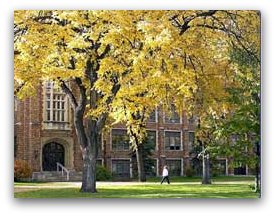
University North Dakota Nurse Anesthetist Program
Nurse Anesthesia Specialization
College of Nursing
430 Oxford St-stop 9025
Grand Forks, ND 58202
Quick Facts
CRNA Degree offered
Doctor of Nursing Practice, Post-Masters DNP (completion)
Program Length
36 months – full-time
Once you have been admitted to the program, you may take any of the College of Nursing (non-anesthesia) core courses listed for the first academic year. The program has a 36-month duration regardless of the number of courses taken early, but taking any of these early will lighten your workload during the academic phase.
Credit Hours
97 credit hours
Starting Month
August
Application Deadline
September 1st is the application deadline for the following Fall semester.
Entire Cost of CRNA School for University North Dakota Nurse Anesthetist Program
Please note that tuition is calculated at the current 2020-2021 rate. Tuition at most schools increases slightly each academic year. Over the duration of the program, expect to pay a tuition that is slightly higher than what is shown here.
Cost of In State Tuition: $86,281
*Fees and expenses: $10,148
Grand Total: $96,428
**Cost of Out of State Tuition: $129,421
*Fees and expenses: $10,148
Grand Total: $139,569
*Fees and certification exam fee.
*This estimate does not include the cost of mandatory health insurance.
**Residents of Minnesota are eligible for a lower rate than the out of state rate but it is slightly higher than the in-state rate.
Class Size
16
Number of Applicants
60
CRNA Training
Are you concerned that University North Dakota Nurse Anesthetist Program won’t give you the specific experiences or training you need to be a successful CRNA? Learn what standards CRNA Programs must meet in order to be accredited by the Council on Accreditation of Nurse Anesthesia (COA).
This CRNA program (as well as all others that are accredited by the COA) prepares you to take the CCNA certification exam at the conclusion of the program, allowing you to become a CRNA.
During your first year at University North Dakota, you’ll spend most of your time on campus at the College of Nursing.
During the Spring semester of your second year, you’ll begin to develop your clinical skills, become more familiar with the operating room environment, and to begin to apply theory to practice.
You will rotate to three or four clinical sites located in North Dakota and surgical cases required of the Council on Certification of Nurse Anesthetists.
Program Requirements
Looking for something specific? Find CRNA schools categorized by their unique requirements.
Some CRNA schools require much more out of their applicants than others. See how the requirements at University North Dakota compare to most CRNA school’s requirements.
CRNA Program Requirements
Required Bachelor Degree
A baccalaureate degree in nursing (BSN) from an NLN or CCNE accredited nursing program. Graduates from non-accredited or foreign schools are evaluated individually.
RN:
Current RN license
Critical Care:
A minimum of one-year full-time experience (two or more years preferred) as a registered nurse in a critical care setting.
Desired settings would include but are not limited to:
- Medical ICU
- Surgical ICU
- Cardiothoracic ICU
- Cardiovascular ICU/ Cardiac Care Unit
- Neurologic ICU
- Neonatal ICU
- Pediatric ICU
*They prefer primary experience to be with the adult population
Experience that does NOT meet the minimum 1-year critical care requirement
- Emergency Room (ER)
- PACU
- Step-down units
- Cath Lab
- Interventional Radiology
- Surgery
Emergency Room experience is not considered “critical care” due to the relatively short duration of individual patient care, although it is considered helpful in forming a well-rounded practitioner.
GPA:
A minimum GPA of 3.0 is based on all years of study at the undergraduate level and/or graduate coursework.
GRE:
Not required
TOEFL:
A score of at least 26 on the writing and speaking subsections is required in addition the School of Graduate Study’s requirement of 76 for applicants who submit an IBT TOEFL.
Certifications are not required for admission but are to be maintained throughout the program:
- ACLS (Advanced Cardiac Life Support)
- PALS (Pediatric Advanced Life Support)
CRNA Educational Requirements
- A statistics course (graduate or undergraduate level)
- An undergraduate course in College Algebra (UND math placement testing or an ACT score of 26+ on the math portion may be used to waive this requirement).
- Organic Chemistry I or upper division Biochemistry course within the last 5 years.
University North Dakota Nurse Anesthetist Program
CRNA School Performance
Accredited CRNA Programs are reviewed regularly.
University North Dakota Nurse Anesthetist Program was last reviewed 01/2011. It was given the maximum of 10 years accreditation standards.
Pass Rate for CRNA Boards at University North Dakota
Please note: It is extremely rare for a student at any CRNA school to not eventually pass the exam. Most students who don’t pass the first time pass the second. Very rarely does a person ever take it a third time. This statistic only measures how well the program prepares students to pass the test the first time around.
First-time test takers: Three consecutive years: 100% (2017, 2018, 2019)
National average (2019): 84.8%
Attrition Rate: 1% (Class of 2019)
Employment Rate: 98% (2019)
CRNA Salaries
An average nurse anesthetist salary in University North Dakota Nurse Anesthetist Program, North Dakota.
North Dakota CRNA salaries are above the national average with an annual mean wage of $195,010.
An average annual nurse anesthetist salary in the US is $181,040 (according to the Bureau of Labor Statistics 2019 study)
All information given on this site about University North Dakota Nurse Anesthetist Program was taken directly from their website.
Salaries pulled from Bureau of Labor Statistics.
Did you find an error on this page? Please report it here