This page was last updated in 2022.
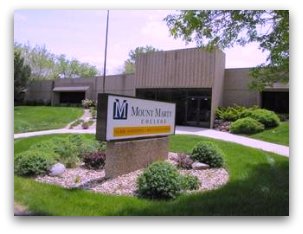
Mount Marty School of Anesthesia is located in Sioux Falls, SD, and is the only school in South Dakota.
Mount Marty School of Anesthesia
Nurse Anesthesiology
5001 West 41st Street
Sioux Falls, SD 57106
Quick Facts
CRNA Degree offered
Doctor of Nurse Anesthesia Practice, Post-Master’s DNP (completion)
Program Length
36 months, full time
Credit Hours
83 credit hours
Starting Month
May
Application Deadline
September 7nd for classes starting the following May. To apply to the DNAP program, you will complete the application via NursingCAS.
Entire Program Cost of CRNA School at Mount Marty School of Anesthesia.
Please note that tuition is calculated at the 2019-2020 rate. Tuition at most schools increases each academic year. Over the duration of the program, expect to pay a tuition that is slightly higher than what is shown here.
Cost of Tuition: $94,205
*Fees and expenses: $7,055
Grand Total: $101,260
*Includes application fee, student support fee, estimated cost for books and graduation fee. They do require you to have some type of health insurance but that total was not added to this figure.
Class Size
32
Number of Applicants
Approximately 150 applications per year
CRNA Training
Are you concerned that Mount Marty School of Anesthesia won’t give you the specific experiences or training you need to be a successful CRNA? Learn what standards CRNA Programs must meet in order to be accredited by the Council on Accreditation of Nurse Anesthesia (COA).
This CRNA program (as well as all others that are accredited by the COA) prepares you to take the CCNA certification exam at the conclusion of the program, allowing you to become a CRNA.
CRNA Program Summary
Mount Marty School of Anesthesia is divided into two phases: 14 months of classroom work (didactic), and 22 months for the clinical phase.
During the didactic phase, you will spend 2 weeks in your primary clinical site. During the clinical phase, it is 90% clinical and techniques required by the Council on Accreditation of Nurse Anesthesia Educational Programs.
The didactic classes are typically held on Mondays, Wednesdays, and human patient simulation laboratory activity.
In regards to the clinical phase, students are assigned by a matching process to one of eleven primary affiliations. These sites are located throughout SD, NE, MN, and IA.
Most students spend four to twelve weeks at a secondary site(s) for a specialty rotation, which will require traveling, in many cases.
At Mount Marty School of Anesthesia, all types of techniques and cases are available to the student in either primary affiliation or specialty rotation.
Program Requirements
Looking for something specific? Find CRNA schools categorized by their unique requirements.
Some CRNA schools require much more out of their applicants than others. See how the requirements at Mount Marty School of Anesthesia compare to most CRNA school’s requirements.
CRNA Program Requirements
Required Bachelor Degree
Bachelor’s degree in nursing or another appropriate baccalaureate degree from an accredited college or university (ACEN or CCNE). Applicants with non-nursing degrees must be registered nurses (RN) with experience as an RN in a critical care setting with their baccalaureate degree in a related discipline.
RN:
Current licensure as an RN
Critical Care:
Minimum of 1 year (2 years preferred), full-time experience as a registered nurse in a critical care setting. Most accepted students have two or more years of acute care experience within the last 3 years.
This experience should provide the skills for physical assessment; monitoring of CVP, PWCP, blood gasses, ECG, and I.V. therapy.
Examples of acceptable critical care experience include:
- Cardiovascular ICU
- Surgical ICU
- Medical ICU
- Neuro ICU
- Pediatric ICU
- Neonatal ICU
- Coronary Care Unit
- Open-heart recovery unit also meets the requirement
You may apply to the CRNA program while you are completing the one-year required nursing experience. Your experience must be completed by the time you begin the program.
They do not accept:
- Step down or transitional care areas
- Post-coronary care
- Intermediate care units
- Progressive care units
- Recovery room/PACU
- Operating Room
- Emergency Room
GPA:
Cumulative GPA of 3.00 on a 4.0 scale.
Minimum GRE scores:
Minimum scores are 150 for verbal, 142 for quantitative and 3.5 on analytical writing portions. GRE must have been taken within the last 5 years.
International Students:
Minimum score of 500 or higher (paper-based test)
Minimum score of 175 or higher (computer-based test)
Minimum score of 60 or higher (internet-based test)
Certification:
- *Basic Life Support (BLS)
- *Advanced Cardiac Life Support (ACLS)
- *Pediatric Advanced Life Support (PALS)
- CCRN (though not required, is seen as more competitive)
- Other specialty certifications will also boost your application
*These certifications should be valid through the end of the first academic semester and are needed prior to the beginning of the program.
Course Prerequisites
- 2 courses in chemistry (6 hours covering elements of organic, inorganic and biochemistry)
- 1 course in elementary statistics or epidemiology
To Stand Out at as an Applicant to Mount Marty School of Anesthesia, have:
- Experience as a preceptor or ability to assume charge position duties on a given shift.
- Service to the community, church or nursing unit.
- A good sense of “self.”
- Commitment to the nursing profession.
- Knowledge of the role of a nurse anesthetist through a shadowing experience.
Mount Marty School of Anesthesia
CRNA School Performance
Accredited CRNA Programs are reviewed regularly.
Mount Marty School of Anesthesia was last reviewed 10/2014. It was given the maximum of 10 years accreditation standards.
First time test takers: 85% for the 5-year average (2016-2020)
Employment: 99% of graduates have found employment within 6 months of graduation for the Class of 2019.
Attrition Rate: 2% for the 5-year average (2016-2020)
Certification Examination: 91% for the Class of 2019
CRNA Salaries
An average nurse anesthetist salary in Mount Marty School of Anesthesia, South Dakota.
South Dakota CRNA salaries are slightly higher than the national average with an annual mean wage of $190,880.
An average annual nurse anesthetist salary in the US is $181,040 (according to the Bureau of Labor Statistics 2019 study)
Frequently Asked Questions
What can I expect during the interview?
Interviews are conducted at the anesthesia program campus in Sioux Falls, SD, usually in December. Each applicant spends approximately 1/2 day with the program director, program faculty members and, RNA clinical instructors.
Applicants will have the opportunity to ask questions concerning program design. Current students are also available to answer questions and offer their perspective on the program.
Can I work as an RN while I’m in the program?
Students at Mount Mary School of Anesthesia should expect to devote 60-70 hours per week to program requirements. Working is strongly discouraged. It may be possible to work 1-2 weekend shifts per month during the didactic phase, but it will be almost impossible to work during the clinical phase of the program.
All information given on this site about Mount Marty School of Anesthesia was taken directly from their website unless otherwise specified.
Salaries pulled from Bureau of Labor Statistics
Did you find an error on this page? Please report it here