The Excela Health School of Anesthesia is one of twelve CRNA schools in Pennsylvania.
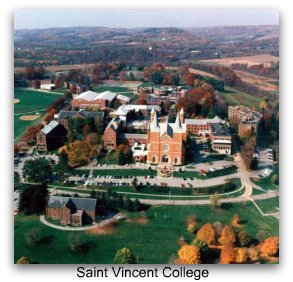
Excela Health School of Anesthesia: Saint Vincent College
One Mellon Way
Latrobe, PA 15650
Excela Health Administrative Office
532 West Pittsburgh Street
Greensburg, PA 15601
Quick Facts
CRNA Degree offered
Doctor of Nurse Anesthesia Practice (DNAP)
Program Length
36 months, full time
Credit Hours
91 credit hours
Program Start
January
Application Deadline
January 15
Excela Health School of Anesthesia School Application Form
Entire Program Cost of CRNA School at Excela Health School of Anesthesia
Cost of Tuition: $104,868
Fees and Total: $108,268
*This includes the cost of books, supplies, test fees, and miscellaneous school expenses.
Class Size
30 Students (approx.)
When did this CRNA Program begin?
Excela Health School of Anesthesia graduated its first class in 1955.
CRNA Program Summary
Are you concerned that Excela Health School of Anesthesia’s Program won’t give you the specific experiences or training you need to be a successful CRNA? Learn what standards CRNA Programs must meet in order to be accredited by the Council on Accreditation of Nurse Anesthesia (COA).
This CRNA program (as well as all others that are accredited by the COA) prepares you to take the CCNA certification exam at the conclusion of the program, allowing you to become a CRNA.
CRNA Program Structure
The Excela Health School of Anesthesia program, in conjunction with Saint Vincent College, is a front-loaded curriculum where you’ll spend your first year immersed in didactic study. You will begin your clinical practicum during the second year and didactic instruction will continue throughout the program.
Your clinical rotations will take place in as many as 20 affiliate sites in the tri-state area. During clinicals, you will gain experience in the administration of general, regional, and ages.
Program Requirements
Looking for something specific? Find CRNA schools categorized by their unique requirements.
Some CRNA schools require much more out of their applicants than others. See how the requirements at Excela CRNA compare to most CRNA school’s requirements.
CRNA Program Requirements
Required Bachelor Degree
Baccalaureate degree in nursing or diploma/associate degree in nursing plus a baccalaureate degree other than a BSN, providing the program considers it appropriate.
RN:
Current Registered Nurse license with expiration date.
Critical Care:
Minimum of one year of nursing experience in an acute care setting.
Acceptable critical care experience includes:
- CCU (Coronary Care Unit)
- ER (Emergency Room – Level One Trauma Only)
- PACU
- ICU (Intensive Care Unit)
- MICU
- Neonatal ICU
- Pediatric ICU
- Trauma ICU
- Surgical ICU
GPA :
Overall GPA of 3.0 or above in your undergraduate degree.
Minimum GRE scores:
GRE is NOT required but preferred.
Certifications:
- BLS (Basic Life Support)
- ACLS (Advanced Cardiac Life Support)
- PALS (Preferred and must be obtained prior to clinicals if accepted)
- CCRN
Excela Health School of Anesthesia
CRNA School Performance
Accredited CRNA Programs are reviewed regularly.
Excela Health School of Anesthesia Nurse Anesthetist Program was last reviewed 10/2018. It was given ten years accreditation standards.
Pass Rate for CRNA Boards at Excela Health School of Anesthesia
As per Graduating Class of 2019:
Attrition rate: 0%
Employment rate at 6 months: 97%
First time NCE pass rate: 83%
Please note: It is extremely rare for a student at any CRNA school to not eventually pass the exam. Most students who don’t pass the first time pass the second. Very rarely does a person ever take it a third time. This statistic only measures how well the program prepares students to pass the test the first time around.
CRNA Salaries
An average nurse anesthetist salary in Pennsylvania.
Pennsylvania CRNA salaries are a little lower than the national average with an annual mean wage of $185,090.
An average annual nurse anesthetist salary in the US is $189,190 (according to the Bureau of Labor Statistics 2020 study)
Salaries pulled from Bureau of Labor Statistics
All information given on this site about Excela CRNA was taken directly from their website.
Did you find an error on this page? Please report it here